Last updated November 2, 2026 · Reviewed by the Gala Health team
Most common side effects
In the clinical trials behind the Wegovy (semaglutide) and Zepbound (tirzepatide) labels, the most frequent side effects were gastrointestinal. Other commonly reported effects include abdominal pain, headache, fatigue, indigestion, dizziness, bloating and reflux. Injection site reactions were also reported with Zepbound, and hair loss with Wegovy.
| Side effect | Wegovy 2.4 mg | Wegovy placebo | Zepbound 5 / 10 / 15 mg | Zepbound placebo |
|---|---|---|---|---|
| Nausea | 44% | 16% | 25% / 29% / 28% | 8% |
| Diarrhea | 30% | 16% | 19% / 21% / 23% | 8% |
| Vomiting | 24% | 6% | 8% / 11% / 13% | 2% |
| Constipation | 24% | 11% | 17% / 14% / 11% | 5% |
Percentages come from the weight-management trials reported in each brand-name label. The trials differ, so the two columns should not be compared as a head-to-head result. These figures do not describe compounded versions.
When they start and how long they last
Digestive effects are most likely when you begin treatment and each time the dose goes up. The Zepbound label states that the majority of nausea, vomiting and diarrhea events occurred during dose escalation and decreased over time. In the Zepbound weight-management trials, digestive reactions occurred in 56% of people taking Zepbound and 30% of people taking placebo.
Labels also describe a stepwise dosing plan meant to reduce these effects. Wegovy starts at 0.25 mg weekly and Zepbound at 2.5 mg weekly, and each is raised in steps (at least 4 weeks apart on the label schedules). If a dose is not tolerated, the Wegovy label says escalation can be delayed for 4 weeks, and the Zepbound label says a lower maintenance dose can be considered. Changing the plan is a decision for your provider.
Tips that can help with nausea and constipation
The FDA labels and NIH's MedlinePlus give limited self-care advice for these effects, so the most reliable steps are the ones below. Ask your provider about anything beyond them, including over-the-counter remedies.
- Drink fluids. The Wegovy Medication Guide says diarrhea, nausea and vomiting can cause fluid loss (dehydration) that may lead to kidney problems, and that drinking fluids helps reduce the chance of dehydration.
- Tell your provider early. The Medication Guide says to tell your healthcare provider right away if nausea, vomiting or diarrhea does not go away.
- Follow the dose plan. Increasing the dose slowly is how the labels aim to reduce digestive effects. Do not speed up or skip steps on your own.
- Follow the diet and activity advice you were given. MedlinePlus advises following the exercise and dietary recommendations from your doctor or dietitian.
Logging each dose and symptom helps you spot patterns. The Gala GLP-1 app lets you log your doses to share with your care team.
Serious side effects and when to get care
Most side effects are mild to moderate, but some need urgent attention. Based on the Wegovy and Zepbound labels and the Wegovy Medication Guide, contact your provider right away or get emergency care for any of these:
- Pancreatitis: severe pain in the stomach area that will not go away, with or without nausea or vomiting, sometimes felt through to the back. The Wegovy Medication Guide says to stop the medicine and call your provider right away.
- Gallbladder problems: pain in the upper stomach, yellowing of the skin or eyes, fever, or clay-colored stools. In Wegovy trials in adults, gallstones were reported in 1.6% of people on Wegovy and 0.7% on placebo.
- Serious allergic reaction: swelling of the face, lips, tongue or throat, severe rash or itching, very rapid heartbeat, trouble breathing or swallowing, or fainting. The Medication Guide says to stop the medicine and get medical help right away.
- Dehydration and kidney problems: vomiting, diarrhea or nausea that does not go away, or decreased urination.
- Severe stomach problems: severe or persistent stomach or bowel symptoms. Both labels advise against these medicines in people with severe gastroparesis.
- Thyroid warning signs: a lump or swelling in the neck, persistent hoarseness, trouble swallowing or shortness of breath (see the boxed warning below).
- Vision changes, especially if you have type 2 diabetes and a history of diabetic retinopathy.
- Low blood sugar, mainly in people with type 2 diabetes who also take insulin or a sulfonylurea: shakiness, sweating, confusion, blurred vision, slurred speech or a fast heartbeat.
If you think you are having a medical emergency, call 911 or go to the nearest emergency room. Tell any provider who treats you that you take a GLP-1 medicine, including before procedures that use anesthesia or deep sedation.
Boxed warning: thyroid C-cell tumors
Both Wegovy and Zepbound carry the FDA's boxed warning, the most serious type, for risk of thyroid C-cell tumors. In rodents, semaglutide and tirzepatide cause thyroid C-cell tumors at clinically relevant exposures. It is unknown whether they cause these tumors, including medullary thyroid carcinoma (MTC), in humans, because the human relevance of the rodent findings has not been determined.
For that reason, both medicines are contraindicated in people with a personal or family history of MTC or with Multiple Endocrine Neoplasia syndrome type 2 (MEN 2). The labels tell patients to report symptoms of thyroid tumors, such as a lump in the neck, persistent hoarseness, trouble swallowing or shortness of breath.
Who shouldn't take GLP-1 medications
Based on the labels, do not use these medicines if you:
- or a family member have had medullary thyroid carcinoma, or you have MEN 2;
- have had a serious allergic reaction to semaglutide, tirzepatide or any ingredient in the product;
- take another GLP-1 medicine or another product with the same active ingredient (both labels say combining them is not recommended);
- have severe gastroparesis (both labels say the medicine is not recommended).
Tell your provider before starting if you have pancreas or kidney problems, type 2 diabetes with a history of diabetic retinopathy, or a scheduled surgery involving anesthesia or deep sedation. The Wegovy label also advises stopping 2 months before you plan to become pregnant, and the Zepbound label says it may cause fetal harm. Zepbound also advises people who use oral contraceptives to switch to a non-oral method or add a barrier method for 4 weeks after starting and after each dose increase.
Semaglutide vs tirzepatide side effects
The two medicines cause the same kinds of side effects, mostly digestive, and carry the same boxed warning. The tables above come from separate trials, so they do not prove one drug is easier to tolerate than the other. For how the two compare on weight loss, dosing and more, see our semaglutide vs tirzepatide guide, or read about semaglutide for weight loss and tirzepatide for weight loss.
Dosing with compounded GLP-1s
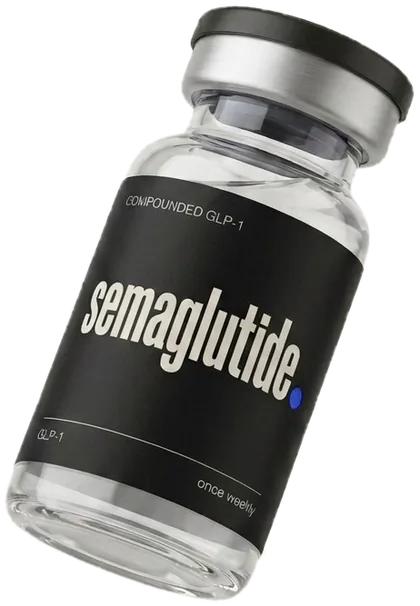
Compounded medications are not FDA-approved. Compounded semaglutide and tirzepatide are prepared by licensed compounding pharmacies from a prescription.
Some compounded vials give the dose in units on a syringe, and how much medicine each unit holds depends on the vial's concentration. Ask your provider or pharmacy how to measure your exact dose in milligrams and milliliters, confirm the right syringe size, and do not use an injectable GLP-1 that arrives warm. See our guide to compounded GLP-1 medications.
How Gala's care team helps
Gala offers compounded semaglutide, compounded tirzepatide and brand-name Ozempic®. A licensed provider reviews your online assessment and prescribes only if it is appropriate for you. If prescribed, your medication ships to your home, you can message your care team about side effects, and your provider can adjust your dose.
To see whether a GLP-1 option may be right for you, start your online GLP-1 assessment, or explore the weight loss hub.
This article is for information only and is not medical advice. Talk to your healthcare provider about your symptoms and treatment.
Frequently asked questions
Do GLP-1 side effects go away?
For many people the digestive side effects lessen over time. The Zepbound label states that most nausea, vomiting and diarrhea occurred during dose escalation and decreased over time. If symptoms are severe or do not go away, tell your provider, who may change your plan.
Is it normal to feel nauseous after each dose?
Nausea is the most common side effect and is most likely when starting or increasing a dose. It was reported by 44% of adults taking Wegovy and 25% to 29% of adults taking Zepbound in the label trials, compared with 16% and 8% on placebo. If nausea keeps happening, does not improve, or comes with vomiting you cannot control or signs of dehydration, contact your provider.
What should I do if I miss a dose?
It depends on the product, so follow the instructions for your medicine. For Wegovy, the label says to give the missed dose as soon as possible if the next scheduled dose is more than 2 days away, and to skip it if the next dose is less than 2 days away. For Zepbound, the label says to give it as soon as possible within 4 days of the missed dose, and to skip it after that. Do not take a double dose. If you miss two or more weekly doses in a row, ask your provider whether to restart at a lower dose. For compounded medications, follow your provider's and pharmacy's instructions.
When should I call a doctor?
Call your provider if side effects are severe or do not go away, or if you have nausea, vomiting or diarrhea that persists or signs of dehydration. Get urgent or emergency care for severe stomach pain that will not go away, pain in the upper stomach with fever or yellowing of the skin or eyes, swelling of the face, lips, tongue or throat, trouble breathing or swallowing, fainting, or a lump in the neck.
Can my provider lower my dose?
Yes, your provider can adjust your dose. The labels describe delaying a dose increase if a dose is not tolerated, and the Zepbound label says a lower maintenance dose can be considered. Do not change your dose on your own. Message your care team or provider if side effects are hard to manage.
Ready to talk to a provider?
Your answers go to a licensed provider, who decides whether treatment is right for you. Learn more about Weight Loss.
Sources
- Novo Nordisk. WEGOVY (semaglutide) prescribing information and Medication Guide. FDA-approved label.
- Eli Lilly. ZEPBOUND (tirzepatide) prescribing information. FDA-approved label.
- MedlinePlus (NIH). Semaglutide injection.
This article is for general information and is not medical advice. Talk to a licensed provider about your own health.