Last updated November 2, 2026 · Reviewed by the Gala Health team
Quick comparison
This table summarizes the FDA-approved weight management medicines that contain each ingredient, based on their prescribing information. Trial results belong to the brand-name drugs, not to compounded versions.
| Semaglutide | Tirzepatide | |
|---|---|---|
| Brand names for weight management | Wegovy® | Zepbound® |
| How it works | GLP-1 receptor agonist | GIP and GLP-1 receptor agonist |
| How it is given | Once-weekly injection (Wegovy also has a daily tablet) | Once-weekly injection |
| Starting dose in the label | 0.25 mg weekly for 4 weeks | 2.5 mg weekly for 4 weeks |
| Usual maintenance dose in the label | 1.7 mg or 2.4 mg weekly (2.4 mg recommended) | 5 mg, 10 mg or 15 mg weekly |
| Average weight change in its main trial | 14.9% at 68 weeks (STEP 1, Wegovy 2.4 mg) | 15.0% to 20.9% at 72 weeks (SURMOUNT-1, Zepbound 5 to 15 mg) |
| Boxed warning | Risk of thyroid C-cell tumors | Risk of thyroid C-cell tumors |
Trial averages come from different studies with different populations and durations, so they should not be compared directly across rows. The head-to-head trial is covered below.
How semaglutide works (GLP-1)
Semaglutide is a GLP-1 receptor agonist. According to the Wegovy prescribing information, GLP-1 is a natural regulator of appetite and calorie intake, and GLP-1 receptors are found in several areas of the brain involved in appetite regulation. Semaglutide binds to and activates that receptor.
Wegovy is approved, together with a reduced-calorie diet and increased physical activity, to reduce excess body weight and maintain weight reduction long term in adults with obesity, or adults with overweight who have at least one weight-related condition. Ozempic also contains semaglutide but has its own label.
How tirzepatide works (GLP-1 + GIP)
Tirzepatide is a GIP receptor and GLP-1 receptor agonist. The Zepbound prescribing information explains that it activates both receptors, and that nonclinical studies suggest the added GIP activity may further contribute to the regulation of food intake.
Zepbound is approved for the same weight-management use as Wegovy, and also to treat moderate to severe obstructive sleep apnea in adults with obesity. Mounjaro® also contains tirzepatide but has its own label. The Zepbound label states that it should not be used together with other tirzepatide-containing products or with any GLP-1 receptor agonist.
What the clinical trials found
Three published trials are most often cited. All of them tested brand-name drugs in adults without type 2 diabetes, alongside lifestyle intervention.
- STEP 1 (Wilding et al., NEJM 2021): 1,961 adults with obesity or overweight received Wegovy (semaglutide 2.4 mg) or placebo for 68 weeks. Average weight change was a 14.9% loss with Wegovy vs 2.4% with placebo. 86.4% of the Wegovy group lost at least 5% of body weight, 69.1% lost at least 10%, and 50.5% lost at least 15%.
- SURMOUNT-1 (Jastreboff et al., NEJM 2022): 2,539 adults received Zepbound (tirzepatide 5 mg, 10 mg or 15 mg) or placebo for 72 weeks. Average weight change was a 15.0%, 19.5% and 20.9% loss for the three doses vs 3.1% with placebo. 85%, 89% and 91% lost at least 5% of body weight vs 35% with placebo.
- SURMOUNT-5 (Aronne et al., NEJM 2025): a head-to-head, open-label trial in 751 adults with obesity. Participants took the maximum tolerated dose of Zepbound (10 mg or 15 mg) or Wegovy (1.7 mg or 2.4 mg) for 72 weeks. Average weight change was a 20.2% loss with Zepbound vs 13.7% with Wegovy.
Averages hide a wide range. Some people lose more, some lose less, and some stop treatment because of side effects. These results describe the FDA-approved brand-name medicines used in studies. They do not describe compounded versions or any individual's expected result.
Side effects compared
Both medicines mainly cause digestive side effects. The Zepbound label notes that most nausea, vomiting and diarrhea occurred during dose escalation and decreased over time. In the label's weight-management trials, these reactions were reported as follows (percent of patients):
| Side effect | Wegovy 2.4 mg | Wegovy placebo | Zepbound 5 / 10 / 15 mg | Zepbound placebo |
|---|---|---|---|---|
| Nausea | 44 | 16 | 25 / 29 / 28 | 8 |
| Diarrhea | 30 | 16 | 19 / 21 / 23 | 8 |
| Vomiting | 24 | 6 | 8 / 11 / 13 | 2 |
| Constipation | 24 | 11 | 17 / 14 / 11 | 5 |
Each label reports its own trials. The studies differ in design, so these figures are not a head-to-head comparison of tolerability.
Both labels carry the same boxed warning about thyroid C-cell tumors and list similar warnings, including pancreatitis, gallbladder disease, dehydration with kidney injury, and serious allergic reactions. For more detail, read our guide to GLP-1 side effects and how to manage them.
Dosing and titration (brand-name label schedules)
Both medicines start low and increase gradually to reduce the risk of digestive side effects. The schedules below come from the Wegovy and Zepbound prescribing information and apply to those brand-name products only.
- Wegovy injection: 0.25 mg weekly for weeks 1 to 4, 0.5 mg for weeks 5 to 8, 1 mg for weeks 9 to 12, 1.7 mg for weeks 13 to 16, then a maintenance dose of 1.7 mg or 2.4 mg weekly (2.4 mg recommended). If a dose is not tolerated, the label says to consider delaying escalation for 4 weeks.
- Zepbound: 2.5 mg weekly for 4 weeks (a starting dose, not a maintenance dose), then 5 mg. The dose can be raised in 2.5 mg steps after at least 4 weeks on the current dose. Maintenance doses are 5 mg, 10 mg or 15 mg weekly, and 15 mg is the maximum. If a maintenance dose is not tolerated, the label says to consider a lower one.
Dosing for any medicine you are prescribed should follow your provider's instructions and the label of that specific product.
Compounded vs FDA-approved versions
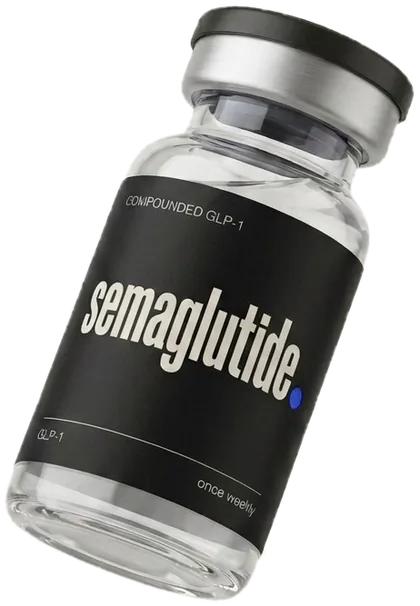
Compounded medications are not FDA-approved. Compounded semaglutide and tirzepatide are prepared by licensed compounding pharmacies from a prescription. According to the FDA, compounded drugs do not undergo FDA premarket review for safety, effectiveness or quality.
Because compounded products are not the same as Wegovy or Zepbound, the trial results above cannot be assumed to apply to them. Strengths, concentrations and labeling can also differ between pharmacies. Ask your provider and pharmacy exactly how to measure each dose, in milligrams and milliliters. Read more in our guide to compounded GLP-1 medications.
Can you switch from one to the other?
Some people switch because of side effects, a plateau, or availability. This is a decision for your prescriber, who will consider your current dose, how you have tolerated treatment, and your medical history. The labels do not recommend using semaglutide and tirzepatide together, and they do not give a switching schedule, so do not change medicines or doses on your own.
If you have missed two or more consecutive doses, the Wegovy label says to restart dose escalation at a lower dose to reduce the risk of digestive side effects. A provider can tell you what applies to your situation.
Getting started with Gala
Gala offers compounded semaglutide, compounded tirzepatide and brand-name Ozempic®. A licensed provider reviews your online assessment and prescribes only if it is appropriate for you. If prescribed, your medication ships to your home, you can message your care team with questions, and your provider can adjust your dose over time.
To see which options may fit, start your online GLP-1 assessment. You can also read about semaglutide for weight loss, tirzepatide for weight loss, or browse the weight loss hub.
This article is for information only and is not medical advice. Talk to your healthcare provider about what is right for you.
Frequently asked questions
Which one leads to more weight loss?
In SURMOUNT-5, the only head-to-head trial so far, adults with obesity taking Zepbound (tirzepatide) lost an average of 20.2% of body weight at 72 weeks compared with 13.7% for adults taking Wegovy (semaglutide). Individual results vary, and these figures apply to the brand-name medicines used in the study.
Which has fewer side effects?
Both cause mostly digestive side effects such as nausea, diarrhea, vomiting and constipation, mainly during dose increases. The labels report these in separate trials, so they cannot be compared directly. Your provider can help you choose based on your health history and how you tolerate treatment.
Can I switch from semaglutide to tirzepatide?
Possibly, but only under the guidance of your prescriber. The labels do not provide a switching schedule and do not recommend using the two together. Your provider will decide the starting dose and timing based on your current dose and how you have tolerated it.
Are compounded versions the same as Wegovy or Zepbound?
No. Compounded medications are not FDA-approved. They are prepared by licensed compounding pharmacies from a prescription, and the FDA does not review them for safety, effectiveness or quality. Clinical trial results for Wegovy and Zepbound should not be assumed to apply to compounded versions.
How do I know which is right for me?
It depends on your medical history, other medicines, goals and how you tolerate treatment. Neither medicine is suitable for people with a personal or family history of medullary thyroid carcinoma or MEN 2, or a prior serious allergic reaction to the drug. A licensed provider can review your information and recommend an option if one is appropriate.
Ready to talk to a provider?
Your answers go to a licensed provider, who decides whether treatment is right for you. Learn more about Weight Loss.
Sources
- Novo Nordisk. WEGOVY (semaglutide) prescribing information. FDA-approved label.
- Eli Lilly. ZEPBOUND (tirzepatide) prescribing information. FDA-approved label.
- Wilding JPH et al. Once-weekly semaglutide in adults with overweight or obesity (STEP 1). N Engl J Med. 2021.
- Jastreboff AM et al. Tirzepatide once weekly for the treatment of obesity (SURMOUNT-1). N Engl J Med. 2022.
- Aronne LJ et al. Tirzepatide as compared with semaglutide for the treatment of obesity (SURMOUNT-5). N Engl J Med. 2025.
- U.S. FDA. FDA's concerns with unapproved GLP-1 drugs used for weight loss.
This article is for general information and is not medical advice. Talk to a licensed provider about your own health.