Last updated November 2, 2026 · Reviewed by the Gala Health team
Perimenopause and menopause: the definitions
The U.S. Office on Women's Health describes perimenopause as the time before menopause when your hormone levels change, and menopause as the point when your periods have stopped for 12 months in a row. After that, the ovaries make very little estrogen and progesterone and stop releasing eggs. MedlinePlus, from the National Library of Medicine, uses the same 12-month rule and notes that perimenopause, also called the menopausal transition, can last several years.
Clinicians also use a more detailed staging system called STRAW+10 (the Stages of Reproductive Aging Workshop + 10). Its 2012 summary in the Journal of Clinical Endocrinology and Metabolism describes stages of reproductive aging before and after the final menstrual period, and simplified the bleeding criteria used to define the early and late menopausal transition. It was built to apply regardless of a woman's age, ethnicity, body size, or lifestyle. Most people will never need the stage numbers, but they explain why your provider may talk about early or late transition.
Postmenopause is simply the years after you reach menopause. Early menopause is menopause before age 45, and premature menopause is before age 40, according to MedlinePlus.
Typical ages and how long it lasts
| Perimenopause | Menopause | |
|---|---|---|
| What it is | The transition when hormone levels change and periods become irregular | The point reached after 12 months in a row without a period |
| Typical timing | Usually starts in the mid to late 40s; some people notice symptoms in their late 30s | Usually between about 45 and 55; U.S. average is 52 |
| Duration | About four years on average, and up to 10 | A single point, followed by postmenopause |
| Can you get pregnant? | Yes. Pregnancy is still possible | No longer possible |
Sources: Office on Women's Health (womenshealth.gov) and MedlinePlus. Your own timeline can differ, and removing both ovaries surgically brings on menopause right away.
Symptoms: where they overlap and where they differ
Many symptoms look the same in both stages, which is why the two are easy to confuse. MedlinePlus lists changes in periods, hot flashes and night sweats, trouble sleeping, vaginal dryness that can make sex painful, mood changes such as irritability or anxiety, and bladder problems.
What mostly sets perimenopause apart is the pattern of periods. They may be irregular, with more or less time in between, and lighter, heavier, shorter, or longer. Since pregnancy is still possible in this stage, contraception remains a conversation to have with a provider. After menopause, periods are gone, but symptoms such as hot flashes, sleep trouble, vaginal and urinary changes can continue. The Office on Women's Health says hot flashes and night sweats last 7 to 12 years on average for many people.
Read more about hot flashes or browse all menopause symptoms. The Office on Women's Health also states that vaginal bleeding after menopause is not normal and needs prompt evaluation.
How it is diagnosed
The Office on Women's Health says a provider usually determines perimenopause from your age, symptoms, and changes in your periods, and that blood hormone tests are usually not needed. The National Institute of Child Health and Human Development (NICHD) likewise says blood tests are not required, while noting that providers can measure estradiol, follicle-stimulating hormone (FSH), and luteinizing hormone (LH), and that levels of FSH and LH rise around menopause as estradiol falls.
Testing is therefore optional rather than a requirement for a woman with typical symptoms. The Office on Women's Health says that if your periods stop before age 40, you can ask about testing.
Menopause itself is confirmed looking back: once 12 months have passed with no period, you have reached it.
When treatment can start
You do not need to wait for a particular stage to talk with a clinician. MedlinePlus lists lifestyle changes, non-hormone medicines, and hormone therapy (usually estrogen, or estrogen with a progestin) as options, and says providers may recommend the lowest effective dose for the shortest time needed.
For hormone therapy, timing matters. The Menopause Society's 2022 position statement says benefits outweigh risks for most healthy symptomatic women who are younger than 60 and within 10 years of menopause onset, and recommends risk stratification by age and time since menopause. FDA states in its November 2025 announcement that the labeled recommendation for systemic hormone therapy is to start within 10 years of menopause onset or before age 60.
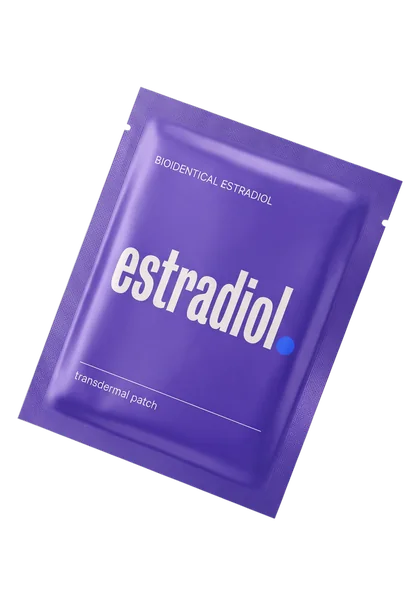
If you have a uterus and take estrogen, a progestogen is added to protect the uterine lining. That is covered in our guides on estradiol and on progesterone for sleep. To compare delivery forms, see estradiol patch vs pill.
When to see a provider
Bring up symptoms whenever they affect sleep, mood, work, or relationships; you do not need a specific threshold. Some situations deserve prompt attention:
- Vaginal bleeding after menopause, which the Office on Women's Health says is not normal and needs prompt evaluation
- Periods that stop before age 40, when you can ask about testing
- Periods that become very heavy or change sharply, since MedlinePlus lists heavy bleeding among the problems that have treatments
- Painful sex, vaginal dryness, or repeat urinary tract infections, which the Office on Women's Health says may worsen without treatment
MedlinePlus also notes longer-term effects of menopause, including bone loss and higher cholesterol with greater risk of heart disease and stroke, which is one reason regular checkups matter after menopause too.
How it works at Gala
Gala is a telehealth service. You fill out an online intake and a licensed provider reviews it, prescribing only if treatment is appropriate for you. Options include estradiol as a pill or patch, progesterone, vaginal estradiol, and non-hormonal options. No insurance is required, your care team is available by message to adjust your dose, and medication ships to your home.
Explore the hormone health hub or start your online menopause assessment.
Frequently asked questions
What is the difference between perimenopause and menopause?
Perimenopause is the transition before menopause, when hormone levels change and periods become irregular. Menopause is the point when you have not had a period for 12 months in a row. Postmenopause is the time after that.
At what age does perimenopause start?
It usually starts in the mid to late 40s, though some people notice symptoms in their late 30s. According to the Office on Women's Health it lasts about four years on average and can last up to 10.
Can I get pregnant during perimenopause?
Yes. Periods may be irregular, but pregnancy is still possible until you reach menopause. Talk with a provider about contraception if pregnancy is not wanted.
Do I need a blood test to know if I am in perimenopause?
Usually not. The Office on Women's Health says a provider generally decides from your age, symptoms, and period changes, and that blood hormone tests are usually not needed. Testing may be considered if your periods stop before age 40.
Can I start hormone therapy before my periods stop?
That is a decision for you and a clinician based on your symptoms and health history. In November 2025 the FDA announced labeling changes recommending that systemic hormone therapy be started before age 60 or within 10 years of menopause onset.
Ready to talk to a provider?
Your answers go to a licensed provider, who decides whether treatment is right for you. Learn more about Hormone Health.
Sources
- Office on Women's Health, HHS. Menopause basics.
- MedlinePlus, National Library of Medicine. Menopause.
- NICHD, NIH. How are menopause and perimenopause diagnosed?
- Harlow SD, et al. Executive summary of the Stages of Reproductive Aging Workshop + 10. J Clin Endocrinol Metab. 2012.
- The North American Menopause Society. The 2022 hormone therapy position statement: press release with highlights. 2022.
- The 2022 hormone therapy position statement of The North American Menopause Society. Menopause. 2022;29(7):767-794.
- FDA. HHS Advances Women's Health, Removes Misleading FDA Warnings on Hormone Replacement Therapy. November 10, 2025.
This article is for general information and is not medical advice. Talk to a licensed provider about your own health.