Last updated November 2, 2026 · Reviewed by the Gala Health team
Common side effects of NAD+ injections
Honest answer first: we could not find a published, peer-reviewed trial that measured side effects of subcutaneous or intravenous NAD+ in healthy adults taking it for wellness. A 2026 systematic review of NAD-related interventions found no eligible outcome trials that tested injected NAD+ itself for anti-aging or wellness, and only an intravenous pharmacokinetic pilot without clinical outcomes. That means rates for flushing, nausea, or headache after an NAD+ injection are not established in the literature.
What can be said with confidence is limited to two points:
- Injection-site reactions are a known possibility with subcutaneous medicines in general. For example, the FDA-approved labeling for the injectable growth hormone somatropin lists injection site reactions among common adverse reactions. This is not a measured NAD+ figure, only a reminder that redness, soreness, or swelling where you inject is a reasonable thing to watch for.
- In a 2023 randomized, placebo-controlled safety trial of 20 people with Parkinson's disease, oral nicotinamide riboside at 3,000 mg per day for four weeks produced only mild events (grade 1), and the difference from placebo was not statistically significant. Headache, fatigue, nausea, and dyspepsia were among the events in the NR group. This was an oral precursor, a small group, and a short trial, and the authors advised against using that dose outside monitored studies.
Stop and contact a clinician if you have hives, swelling of the face or throat, trouble breathing, chest pain, or any reaction that worries you. Call 911 for severe symptoms.
What the research actually shows
NAD+ (nicotinamide adenine dinucleotide) is a coenzyme found in every cell. It is different from its precursors, nicotinamide riboside (NR) and nicotinamide mononucleotide (NMN), which are the compounds most human trials have tested, almost always by mouth. Results for one do not automatically carry over to another or to a different route of administration.
The 2026 systematic review in Ageing Research Reviews covered 113 studies (33 in humans, 80 in rodents). In people, oral NR and NMN reliably raised NAD-related blood or cell markers, but effects on functional, metabolic, and vascular outcomes were mixed and often null. The authors called clinical effectiveness for anti-aging or wellness inconclusive and asked for larger, longer trials, especially for parenteral approaches.
A 2025 review in Nature Metabolism reached a similar place: preclinical studies are encouraging, but human trials have shown limited efficacy, and rodent results do not translate directly. Nothing here is a reason to expect a particular benefit from an NAD+ injection.
Why NAD+ levels are said to decline with age
A widely cited 2020 review in Nature Reviews Molecular Cell Biology describes a gradual decline in tissue and cellular NAD+ with age in several species, including rodents and humans, and links lower NAD+ to age-related conditions. The same review lists open questions, including whether restoring NAD+ benefits aging humans.
The picture is less settled than the headline suggests. The 2025 Nature Metabolism review notes that an age-related decline in humans has been consistently observed in only a limited number of studies. A 2026 study of seven human cohorts reported that whole-blood NAD+ was remarkably stable with age, which led its authors to suggest blood NAD+ may be a poor biomarker of aging. So "NAD+ falls with age" is a hypothesis with mixed human data, not an established treatment target.
Who should not use NAD+
Gala's intake screens for two exclusions before a provider reviews your case: a hematocrit of 52% or higher, and a known allergy to NAD. If either applies to you, NAD+ is not appropriate through our program.
Beyond those, tell your provider about every medicine and supplement you take, any history of allergic reactions, and whether you are pregnant or breastfeeding. Anything that makes a provider hesitate is worth saying out loud, because a clinician can only weigh risks they know about.
If you also take a GLP-1/GIP medication, ask about it directly. At Gala, if your GLP-1/GIP prescription contains a small amount of nicotinamide riboside, you can still receive NAD+ as part of that prescription. A separate, standalone NAD+ prescription on top of it is not available. Your provider confirms which applies to you. See our GLP-1 side effects guide for that class of medicine.
Regulatory status
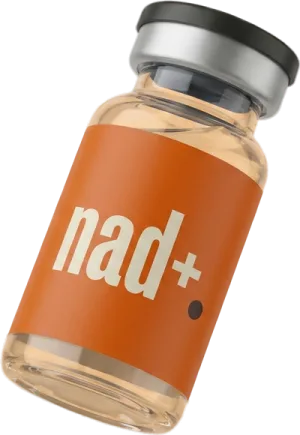
NAD+ injections offered by telehealth companies are typically compounded. Compounded medications are not FDA-approved. The FDA states that it does not verify the safety, effectiveness, or quality of compounded drugs before they are marketed.
For compounders, FDA keeps lists of bulk substances that have been nominated for use. Nicotinamide adenine dinucleotide (NAD) appeared on the Category 1 list (substances under evaluation) in the version updated May 14, 2026. Category 1 means the FDA is still evaluating the substance. It is not an approval and not a finding that NAD+ works.
Questions to ask your provider
- What is the evidence for the specific goal I have, and how would we know if it is not working?
- Which pharmacy compounds this product, and what is its licensing?
- How should I rotate and care for injection sites, and what local reactions are expected versus a reason to call?
- Does anything I take now, including a GLP-1/GIP medication, change whether NAD+ is right for me?
- When should I stop, and who do I contact if something feels wrong?
How Gala's longevity program works
You complete an online health questionnaire, and a licensed provider reviews it asynchronously in a roughly 5 to 7 minute consult, with no video call required. If NAD+ is appropriate, your provider confirms the dosing before anything ships. It is a subcutaneous injection you give yourself at home, with up to a 3-month supply per visit and a quarterly check-in to continue.
Curious how it compares with other options? Read about NAD+ at Gala, the sermorelin option, and our guide to sermorelin vs. HGH, or browse the longevity program. Ready to see whether you qualify? Start your online longevity intake.
Frequently asked questions
Are NAD+ injections safe?
Safety data for injected NAD+ in healthy adults are limited. A 2026 systematic review found no eligible outcome trials of injected NAD+ for wellness. Oral precursors like nicotinamide riboside were generally well tolerated in short trials. A provider should review your history before you start, and NAD+ is not appropriate with a hematocrit of 52% or higher or a known allergy to NAD.
Why does NAD+ cause flushing or discomfort?
We could not find a primary medical source that establishes the cause or the frequency of flushing or discomfort after NAD+ injections, so we do not claim one. If you have flushing, pain, or swelling that bothers you, tell your provider, and seek urgent care for trouble breathing, throat or face swelling, or chest pain.
How long do side effects last?
There are no published data on how long side effects last after an NAD+ injection. Mild local reactions at an injection site are often short-lived with medicines in general, but that is not a measured NAD+ figure. Contact your provider if a reaction is severe, spreads, or does not improve.
Is NAD+ FDA-approved?
No. NAD+ injections from telehealth providers are typically compounded, and compounded medications are not FDA-approved. The FDA does not verify the safety, effectiveness, or quality of compounded drugs before they are marketed.
Can I take NAD+ with a GLP-1?
If your GLP-1/GIP prescription contains a small amount of nicotinamide riboside, you can still receive NAD+ as part of that prescription. You cannot have a separate, standalone NAD+ prescription in addition to that. Your provider will confirm which applies to you.
Ready to talk to a provider?
Your answers go to a licensed provider, who decides whether treatment is right for you. Learn more about Longevity.
Sources
- Gallagher C, Emmanuel OO. NAD+ supplementation for anti-aging and wellness: a PRISMA-guided systematic review. Ageing Research Reviews. 2026.
- Berven H, et al. NR-SAFE: a randomized, double-blind safety trial of high dose nicotinamide riboside in Parkinson's disease. Nature Communications. 2023.
- Vinten KT, et al. NAD+ precursor supplementation in human ageing: clinical evidence and challenges. Nature Metabolism. 2025.
- Trętowicz MM, et al. Human whole-blood NAD+ levels do not vary with age or lifestyle interventions. Nature Metabolism. 2026.
- Covarrubias AJ, et al. NAD+ metabolism and its roles in cellular processes during ageing. Nature Reviews Molecular Cell Biology. 2021.
- FDA. Bulk Drug Substances Nominated for Use in Compounding Under Section 503A (updated May 14, 2026).
- FDA. Compounding and the FDA: Questions and Answers.
- Pfizer / NLM DailyMed. Genotropin (somatropin) prescribing information.
This article is for general information and is not medical advice. Talk to a licensed provider about your own health.